Understanding Neurodivergent Comorbidities: Aspie Quiz Insights Beyond ASD Traits
Have you taken the Aspie Quiz and felt your results left you with more questions than answers? You're not alone. Many people discover that their neurodivergent traits don't fit neatly into one box. You might notice patterns that suggest traits of Asperger's/ASD, but also hints of ADHD, anxiety, or OCD. This can feel confusing, but it's a common and valid experience.
This guide is here to help you make sense of that complexity. We'll explore how your Aspie Quiz responses can offer clues about potential co-occurring conditions. Understanding these overlaps is a powerful step toward greater self-awareness. It can provide clarity on your experiences and help guide your next steps.
The journey to self-understanding is unique for everyone. Tools like the online Aspie Quiz are designed to be a supportive first step, offering valuable insights into your personal traits. If you're ready to begin, you can start your journey with this free and private self-assessment.

How Aspie Quiz Scores Reveal ADHD, Anxiety & Other Neurodivergent Patterns
The Aspie Quiz provides scores that compare Aspie (autistic) and neurotypical traits. However, the true value often lies beyond the final numbers. Your individual answers create a unique pattern that reflects your personal experiences. Learning to read these patterns offers deeper insight into your neurotype.
Instead of focusing only on the final score, consider the quiz a structured way to reflect on your life. Each question is a data point. When viewed together, these points can reveal consistent themes in your social interactions, sensory processing, communication style, and routines.
Interpreting Mixed Aspie Quiz Scores & Traits
It is very common to receive "mixed" results on the Aspie Quiz. You might score high on questions related to special interests and sensory sensitivities but score closer to neurotypical on social communication questions. This doesn't mean the results are inaccurate; it means your profile is nuanced.
A mixed score can be an important clue. It might suggest that while you have some traits associated with the autism spectrum, other factors could be influencing your experiences. For example, social anxiety can sometimes look like autistic social difficulties. Acknowledging this complexity is the first step toward true understanding. These mixed results are a perfect starting point for deeper self-exploration. For a deeper dive, read our guide on What Do My Aspie Quiz Scores Mean?.
Beyond the Numbers: Analyzing Behavioral & Sensory Overlaps
Look back at the specific questions you strongly agreed or disagreed with. Do you notice any themes?
- Sensory Processing: Did questions about sensitivity to light, sound, or touch stand out to you? This is a core trait of autism but is also common in anxiety and ADHD.
- Executive Function: Did you relate to challenges with planning, organization, or starting tasks? This is a hallmark of ADHD but also affects many autistic individuals.
- Repetitive Behaviors: Questions about routines, rituals, or repetitive movements are relevant to both ASD and Obsessive-Compulsive Disorder (OCD), though the underlying reasons often differ.
By analyzing these behavioral and sensory overlaps, you move beyond a simple label and start building a more complete picture of how your brain works. The quiz can help you identify which areas you may want to explore further.
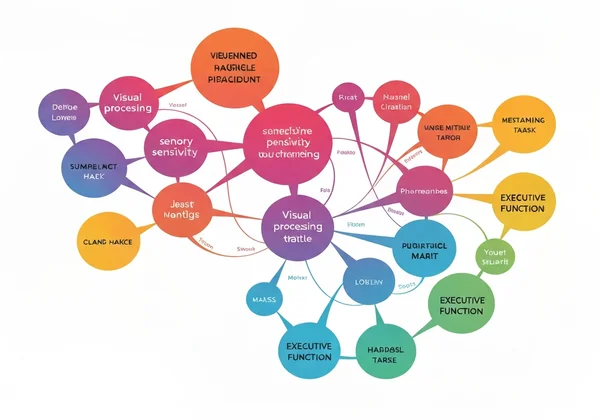
Exploring Neurodivergent Comorbidities: ADHD, Anxiety & More
In the world of neurodiversity, the term neurodivergent comorbidities—or co-occurring conditions—simply means having more than one condition at the same time. The human brain is incredibly complex, and it's very common for traits from different neurotypes to exist together. Autism Spectrum Disorder (ASD) frequently co-occurs with conditions like ADHD, anxiety disorders, and OCD.
Recognizing this is empowering. It validates the feeling that you don't fit perfectly into a single category. Instead of seeing it as having multiple "problems," you can see it as having a unique and layered neurodivergent profile. The free aspie quiz can be a great tool to see which of your traits align with the spectrum, helping you untangle these complex layers.
ADHD & ASD: Understanding Common Intersections
The overlap between Attention-Deficit/Hyperactivity Disorder (ADHD) and Autism Spectrum Disorder (ASD) is one of the most well-documented in neurodiversity. While they are distinct conditions, they share many traits, which can make self-assessment tricky.
Here are some common areas of intersection:
- Executive Dysfunction: Both ADHDers and autistics can struggle with organizing tasks, managing time, and initiating projects.
- Emotional Dysregulation: Difficulty managing intense emotions is a shared experience.
- Social Challenges: While the reasons may differ, both can lead to difficulties in navigating neurotypical social landscapes.
- Hyperfocus: An intense, deep focus on a topic of interest is a signature trait of ASD (often called a "special interest") and is also characteristic of ADHD.
The key difference often lies in the "why." For example, an autistic person might struggle in a social setting due to difficulty reading non-verbal cues, while a person with ADHD might struggle due to impulsivity or inattention.
Anxiety, OCD, and Sensory Sensitivities in Quiz Results
Anxiety and OCD are also frequently linked with autism. Your Aspie Quiz responses might offer clues here as well.
Intense anxiety can sometimes manifest in ways that look like autistic traits. For instance, someone with social anxiety might avoid eye contact and social events, which could be reflected in their quiz answers. However, the root cause is fear of judgment, which is different from the autistic experience of social interactions being genuinely confusing or exhausting.
Similarly, the need for routine and repetitive behaviors in autism can look like the compulsions in OCD. The primary difference is function. For an autistic person, a routine is often calming and regulating. For someone with OCD, a compulsion is a ritual performed to neutralize an obsessive fear. Understanding these subtle differences is key.
Navigating Differential Diagnosis Beyond ASD Traits
After exploring your traits with a tool like the Aspie Quiz, you may feel ready to seek professional clarity. This process is often called "differential diagnosis," where a qualified expert helps distinguish between conditions with overlapping symptoms. The quiz is not a diagnostic tool, but it can be an incredibly valuable starting point for this conversation.
The information you gather from your self-assessment can help you articulate your experiences to a healthcare provider. It gives you a framework to articulate your experiences. This vocabulary is vital for your diagnostic journey.
When to Consider Further Professional Evaluation
Self-exploration is powerful, but sometimes a professional assessment is a necessary next step. You might consider seeking a formal evaluation if:
- Your traits are causing significant distress or impacting your ability to function at work, school, or in relationships.
- You want to explore official support or accommodations.
- You are seeking therapeutic support tailored to your specific neurotype.
- You simply want the clarity and validation that a formal diagnosis can provide.
Remember, this is a personal decision. There is no right or wrong time to seek help. When you feel ready, the insights from your self-assessment can be a helpful guide. If you're unsure where to begin, taking our Asperger’s self-assessment quiz can help organize your thoughts.
The Role of a Qualified Clinician in Your Diagnostic Journey
A clinician experienced in neurodiversity (like a psychologist or psychiatrist) plays a critical role in providing an accurate diagnosis. They will not rely on a single test. Instead, they conduct a comprehensive evaluation, which may include:
- Detailed Interviews: Discussing your developmental history, from childhood to the present.
- Standardized Assessments: Using multiple clinical tools designed to assess for ASD, ADHD, and other conditions.
- Observational Data: Gathering information from you and sometimes from family members.
Their expertise lies in understanding the subtle distinctions between overlapping conditions. They can help you understand not just what your diagnosis is, but how your unique combination of traits works together. This professional insight is something no online quiz can replace.
Strategies for Living with Co-Occurring Mental Health Conditions
Understanding your neurodivergent profile is the first step. The next is learning to live well with it. Having co-occurring conditions means developing a toolkit of strategies that supports your entire being, not just one aspect of it. The goal is not to "fix" yourself, but to create a life that accommodates and celebrates your unique mind.
Embracing your full identity can be a liberating experience. It allows you to move from confusion to self-advocacy, finding ways to thrive on your own terms.

Self-Advocacy and Support Resources
Self-advocacy means understanding your needs and learning to communicate them effectively to others. This could be as simple as telling a friend you need quiet time to recharge or requesting accommodations at work, like noise-canceling headphones.
Finding community is also crucial. Connecting with others who share similar experiences can reduce feelings of isolation and provide practical advice. Online forums like Reddit (e.g., r/autism, r/ADHD) and other neurodivergent communities can be wonderful sources of support and validation.
Holistic Approaches to Neurodivergent Well-being
A holistic approach looks at your well-being as a whole. It’s about creating balance and supporting your mental, emotional, and physical health. Consider exploring:
- Sensory Regulation: Identify what soothes your sensory system (e.g., weighted blankets, calming music) and what overwhelms it. Create a sensory-friendly home and work environment.
- Stress Management: Many neurodivergent people find mindfulness, gentle exercise like yoga, or spending time in nature to be highly effective for managing stress and anxiety.
- Strength-Based Focus: Shift your perspective from challenges to strengths. Your intense focus, unique perspective, and deep knowledge in areas of interest are incredible assets.
Building a life that works for you is an ongoing process of discovery. Be patient and compassionate with yourself along the way.
Your Journey to Deeper Self-Understanding Starts Here
Navigating the complexities of neurodiversity can feel overwhelming, but you don't have to do it alone. Your Aspie Quiz results are not an endpoint; they are a signpost on your path to self-discovery. They offer valuable clues that can help you understand the beautiful and intricate ways your mind works.
If your results feel mixed or complex, you’re not alone—this is a common and meaningful part of the neurodivergent experience. Remember that overlaps between ASD, ADHD, and anxiety are the rule, not the exception. The insights you gain are a powerful starting point for conversations with professionals. Most importantly, this journey is about understanding and acceptance, not judgment.
Ready to take that first step toward clarity? Take the Aspie Quiz today to gain personalized insights and begin exploring your unique neurodivergent profile.
Frequently Asked Questions About Aspie Quiz & Co-Occurring Conditions
How accurate is the Aspie Quiz in identifying co-occurring conditions?
While the Aspie Quiz focuses on autism-related traits, your responses might reveal patterns that overlap with other neurotypes, like ADHD or anxiety. It does not directly diagnose co-occurring conditions like ADHD or OCD, but the pattern of your responses can provide valuable clues. It is best used as a tool for self-reflection to see which areas you may want to explore further.
Is the Aspie Quiz a diagnosis for ASD or other conditions?
No, absolutely not. The Aspie Quiz is a preliminary self-screening tool, not a substitute for a professional medical diagnosis. Only a qualified clinician can provide a formal diagnosis after a comprehensive evaluation. The quiz is intended to be an informative first step in your self-exploration journey.
What do my Aspie Quiz scores mean if I suspect I have ADHD too?
If you suspect you have both ASD and ADHD traits, look at your quiz results with that in mind. Pay special attention to questions related to focus, organization, impulsivity, and restlessness. Your score can serve as a great starting point for a discussion with a healthcare professional, helping you explain exactly which traits you identify with. You can always explore your Aspie Quiz results on our platform.
How does the Aspie Quiz compare to AQ test or RAADS-R for complex profiles?
The Aspie Quiz, the Autism Spectrum Quotient (AQ), and the Ritvo Autism Asperger Diagnostic Scale-Revised (RAADS-R) are all self-assessment tools, but they have different focuses. The Aspie Quiz provides a helpful comparison of Aspie vs. neurotypical traits. The AQ and RAADS-R are often used in more clinical or research settings. For a complex profile, each tool might offer a different piece of the puzzle, but none can replace a professional evaluation.