Sindrome di Asperger: An English Guide to Signs, Causes, Tests, and Next Steps
If you searched for "sindrome di asperger," you are probably trying to make sense of a pattern: social effort that feels different from other people's, intense interests, sensory overload, literal communication, or a child whose strengths and struggles do not fit easy labels. In English, the phrase usually maps to Asperger's syndrome, a term many people still use even though modern clinical systems often place these traits within autism spectrum disorder. This guide explains the main signs, how they may appear in adults and children, what a self-screening test can and cannot do, and how to use an autism trait self-reflection tool as one gentle starting point.

What "Sindrome di Asperger" Means Today
"Sindrome di Asperger" is the Italian wording for Asperger's syndrome. Historically, it described people with autism-related social communication differences, focused interests, repetitive patterns, and sensory or motor differences, while spoken language and intellectual development were not markedly delayed. Many people still find the term useful because it matches how they learned about themselves, how older paperwork was written, or how public discussions are phrased.
Today, many clinicians use autism spectrum disorder as the broader category. That shift matters because it frames autism as a spectrum of support needs rather than a simple high or low functioning label. A person may be verbally fluent and academically strong while still needing real support with sensory stress, social interpretation, executive function, anxiety, transitions, or burnout.
For readers, the practical takeaway is simple: the label is less important than the pattern. If "sindrome di asperger sintomi" or "cos'e la sindrome di asperger" brought you here, focus on what the traits look like in daily life, how long they have been present, and whether they affect school, work, relationships, or wellbeing.
Common Signs Without Turning Them Into a Checklist
People often expect a neat symptom list, but Asperger-related traits are better understood as clusters. One person may be highly talkative about a favorite subject; another may speak very little in unfamiliar settings. One may seek deep friendships but miss unspoken social cues; another may need long recovery time after social contact. The same trait can look different depending on age, masking, culture, stress level, and support.
Common patterns can include difficulty reading indirect language, facial expressions, tone, or unwritten group rules. Conversations may feel easier when the topic is clear, factual, or shared, and harder when the goal is small talk. Routines may provide comfort, while sudden changes can feel unusually draining. Focused interests can become a source of expertise, joy, identity, and sometimes time-management challenges.
Sensory differences are also common. Bright lights, layered noise, clothing textures, strong smells, or crowded spaces may feel more intense than other people expect. Motor coordination may feel awkward for some people, but it is not universal. None of these signs alone proves anything. The important question is whether several patterns have been consistent over time and whether they shape everyday functioning.

Adults, Children, and When Traits May Appear
Searches such as "sindrome di asperger bambini," "sindrome di asperger adulti," and "sindrome di asperger sintomi adulti" point to one shared question: why do traits become visible at different life stages? In children, differences may become clearer when social expectations increase. Nursery or early school can reveal difficulty joining play, adapting to group routines, coping with noise, or understanding peer conflict. Some children compensate well at home but struggle in busy classrooms.
In adults, the pattern may be more hidden. Many adults learned to mask by copying social scripts, rehearsing conversations, forcing eye contact, or suppressing sensory needs. Masking can help someone get through the day, but it can also lead to exhaustion, anxiety, shutdowns, or a feeling of living behind a performance. This is why some adults only begin exploring autism after a child's assessment, a workplace burnout, a relationship conflict, or years of feeling "different" without a clear explanation.
The question "sindrome di Asperger quando si manifesta?" has a nuanced answer. Autism-related traits are neurodevelopmental, meaning the underlying pattern begins early in development, but it may not be recognized early. Visibility often depends on environment. A supportive, predictable setting can reduce distress, while a socially complex or sensory-heavy setting can make needs more obvious.
Physical Appearance, Intelligence, and Famous People
"Sindrome di asperger aspetto fisico" is a popular search, but physical appearance is not a reliable way to identify Asperger-related traits. Some people may have motor differences, posture differences, a distinctive speaking rhythm, or unusual facial expressiveness under stress. Those are not the same as an "Asperger look." Many autistic people have no visible physical marker at all.
The same caution applies to intelligence. Older descriptions often connected Asperger's with average or above-average intellectual ability, and some people do have exceptional memory, pattern recognition, technical skill, creativity, or verbal knowledge. Still, intelligence varies widely. It is more respectful and more accurate to look at individual strengths and support needs instead of using genius myths.
"Sindrome di asperger personaggi famosi" and "personaggi famosi con sindrome di asperger" are also common searches. Public examples can reduce stigma when they are handled carefully, but famous-person lists are often speculative. Unless a person has publicly shared their own history, it is better not to treat them as proof. A healthier use of these searches is to ask: what strengths, accommodations, and environments help neurodivergent people do good work?
Genetics, Causes, and What Not to Blame
People searching "sindrome di asperger genetica" or "sindrome di asperger cause" usually want a clear origin story. Current understanding points to a complex mix of genetic and developmental factors. Autism-related traits often run in families, but there is no single simple gene that explains every person's experience. Family patterns may show up as social style, sensory sensitivity, deep interests, attention differences, or communication preferences.
It is also important not to blame parenting style, personality, effort, or moral character. Asperger-related traits are not caused by being cold, rude, spoiled, or unwilling to care. Many autistic people care deeply but express care in ways that may be less conventional: practical help, loyalty, problem solving, sharing knowledge, remembering details, or protecting someone from overwhelm.
If you are exploring traits for yourself or your child, try separating cause from support. You may never get a perfectly simple origin story, but you can still identify useful supports: quieter workspaces, predictable routines, explicit communication, sensory tools, written instructions, recovery time, and people who respect direct language.
How Tests Fit Into the Picture
The phrase "sindrome di asperger test" often reflects a very human wish: a clearer answer. Online self-screening tools can help you organize observations, notice patterns, and prepare language for a conversation with a qualified professional. They should not be treated as a final clinical answer.
A reflective tool works best when you use it as one piece of evidence. Think about examples from childhood and adulthood, situations where traits are easy or hard to notice, and whether stress changes your answers. If you explore the Aspie Quiz self-screening experience, read your results as a prompt for reflection rather than a verdict. Scores can be useful, but your real-life context matters just as much.
Here are useful questions to write down before or after any self-screening:
- Which traits have been present for years, not just during one stressful month?
- Which environments make communication, sensory load, or transitions harder?
- Which strengths show up alongside the challenges?
- What support has already helped, even informally?
- What would you want a professional to understand about your daily life?
Practical Next Steps for Self-Reflection
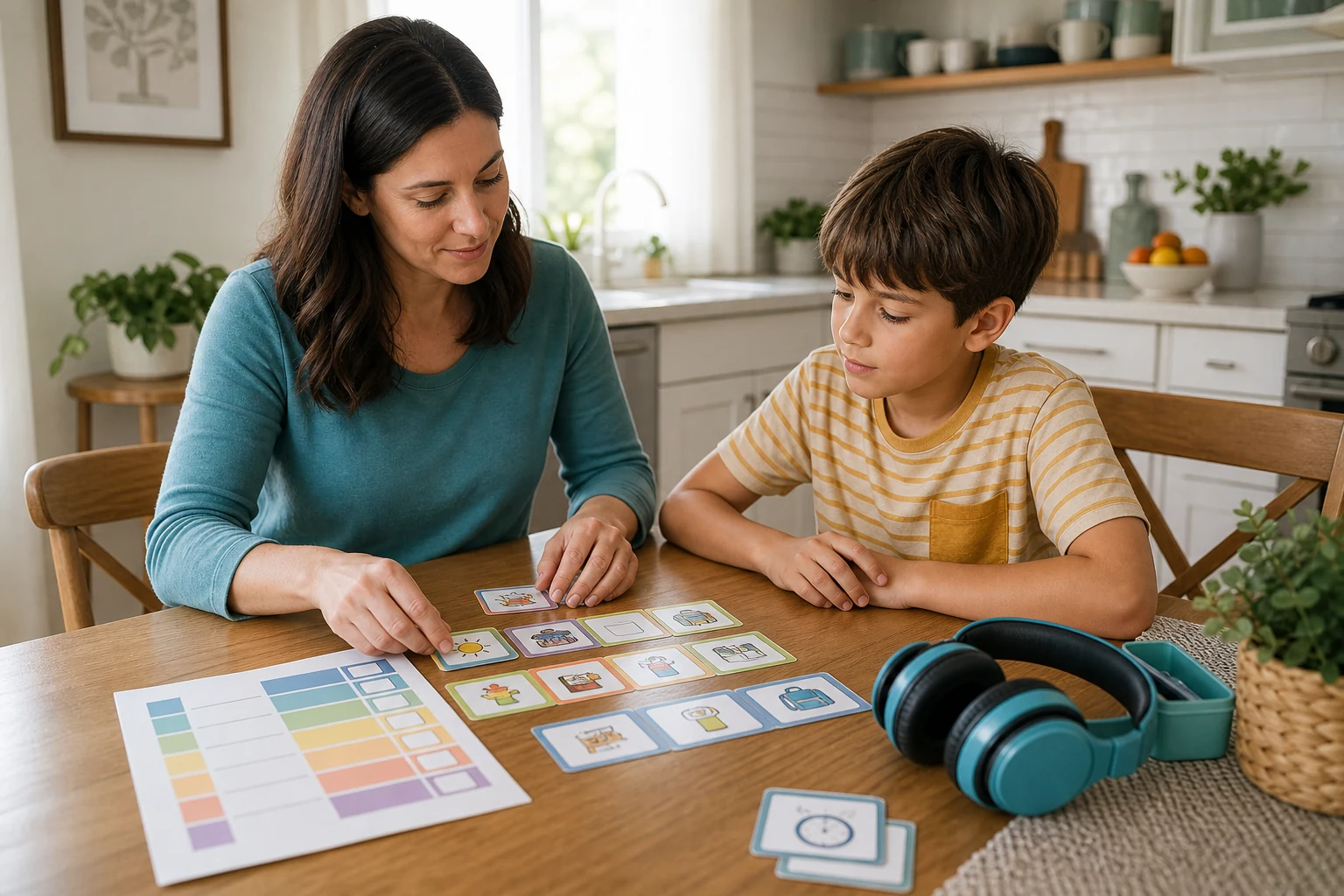
If the topic feels personal, keep the next steps small and grounded. You do not need to solve your whole life story in one sitting. Start by collecting patterns. For one or two weeks, note moments of ease and overload: meetings, school transitions, crowded shops, unexpected changes, group conversations, special interests, sleep, and recovery time.
Then translate patterns into needs. "I hate meetings" might become "I process better with an agenda and written follow-up." "My child melts down after school" might become "the school day uses up social and sensory energy, so home needs a quieter transition." "I seem blunt" might become "I communicate more clearly when expectations are explicit."
For children, consider discussing observations with teachers, pediatric professionals, or child development specialists, especially if school stress, social exclusion, speech-language concerns, sleep issues, anxiety, or daily functioning are affected. For adults, a psychologist, psychiatrist, neurodevelopmental clinic, or autism-informed therapist may help if you want formal evaluation, accommodations, or support for co-occurring anxiety, ADHD, or burnout.
Support does not have to wait for a formal label. Many practical changes are low risk: written routines, sensory breaks, direct communication, reduced background noise, predictable transitions, and permission to recover after demanding social situations.
Use "Sindrome di Asperger" as a Starting Point, Not a Box
The best use of "sindrome di asperger" is not to trap yourself inside a label. It is to build a more accurate map of your experiences. Maybe the map leads toward autism spectrum evaluation. Maybe it points toward ADHD, anxiety, giftedness, trauma, sensory processing differences, or a combination. Either way, careful reflection can make the next conversation more useful.
AspieQuiz.org is designed for that early exploration mindset. You can review a private self-discovery starting point when you want language for your traits, strengths, and questions, then decide whether professional guidance would be helpful. Keep the process compassionate. A pattern is not a character flaw; it is information you can use to build better supports.

FAQ
What is the difference between autism and sindrome di Asperger?
Asperger's syndrome is an older term for a pattern now commonly understood within the autism spectrum. It was often associated with autism-related social and behavioral traits without marked early language or intellectual delay. Modern language varies by country, clinician, and personal preference.
How does someone with Asperger-related traits think?
There is no single thinking style. Some people think in systems, details, images, words, patterns, or strong interests. Many prefer clarity, consistency, and direct communication. The useful question is not how all people think, but what helps one specific person process information well.
How does an Asperger person show affection?
Affection may be shown through practical help, loyalty, sharing interests, solving problems, remembering preferences, giving space, or direct words. Some people are physically affectionate; others are not. Different expression does not mean a lack of care.
At what age does sindrome di Asperger appear?
The underlying neurodevelopmental pattern begins early, but recognition can happen later. Some signs may be noticed around toddlerhood or early school years, while many adults recognize the pattern only after demands increase or masking becomes exhausting.
Is there a physical appearance linked to Asperger's?
No reliable physical appearance identifies Asperger-related traits. Motor coordination, posture, facial expression, or sensory responses may differ for some people, but many autistic people have no visible marker.
Can an online test replace a professional evaluation?
No. A self-screening test can help organize observations and support reflection, but professional evaluation considers development, daily functioning, context, and other possible explanations.
Should I read famous-person lists about Asperger's?
They can be interesting, but treat them carefully. Public labels are often speculative unless someone has shared their own story. It is better to focus on respectful examples of strengths, supports, and environments that help neurodivergent people thrive.