Aspie Quiz Results Explained: Understanding Co-Occurring Conditions
Taking the Aspie Quiz can be a significant first step in understanding your unique neurocognitive profile. It provides valuable insights into traits associated with the autism spectrum. But what if your results feel more complex than expected? Do you see patterns that don't seem to fit a single, clear-cut profile?
If you've received mixed scores or noticed traits that seem contradictory, you are not alone. Many people discover that their neurotype is not a simple label but a rich tapestry of different characteristics. This can happen when Autism Spectrum Disorder (ASD) traits co-occur with other conditions like ADHD, anxiety, or depression.
This guide will help you understand how common co-occurring conditions can influence your quiz results. We'll explore what these overlapping patterns mean for your self-discovery journey. Understanding this complexity is the key to gaining a clearer picture of yourself. To begin your exploration, you can start your test on our platform.

Why Your Aspie Quiz Results Might Suggest Multiple Neurotypes
When you take the Aspie Quiz, you are measuring a wide range of traits, behaviors, and experiences. Sometimes, the results don't point to a single neurotype. This isn't a flaw in the test; rather, it reflects the complex reality of human neurodiversity. Many individuals have traits that span across different diagnostic categories.
This overlap is more common than many people realize. For instance, the intense focus associated with ASD can look similar to the hyperfocus seen in ADHD. Similarly, social withdrawal might be a sign of ASD traits, but it can also be a symptom of social anxiety. Understanding these nuances is crucial for interpreting your results accurately.
The Neurodiversity Spectrum: Beyond Binary Categories
It’s helpful to think of neurodiversity not as a set of separate boxes but as a wide, continuous spectrum. Labels like "autistic" or "neurotypical" are useful starting points, but they don’t capture the full picture. Many people exist somewhere in between or have a combination of traits that define their unique neurodivergent profile.
Your quiz results might show a mix of high Aspie and neurotypical scores, or highlight traits that are common in more than one condition. This doesn't mean your results are invalid. It simply suggests that your personal experience is multifaceted. Embracing this complexity is a core part of the neurodiversity paradigm, which celebrates all variations of the human brain as natural and valuable.

How Anxiety and Depression Affect Aspie Quiz Patterns
Anxiety and depression are two of the most common conditions that co-occur with autism. These conditions can significantly influence how you answer questions on the Aspie Quiz and shape your final scores. For example, social anxiety can lead to avoidance of social situations. This might inflate scores in the 'social difficulties' domain of the quiz.
Likewise, depression can cause emotional numbness or difficulty identifying feelings (alexithymia). These traits are also associated with ASD. It can also lead to a withdrawal from hobbies and interests, which may look like a lack of the "special interests" often seen in autistic individuals. Recognizing the impact of your mental health is a critical step in understanding your results. It helps you see which traits might be rooted in your core neurotype and which may be amplified by your emotional state.
ADHD Traits That Can Mimic or Accompany ASD
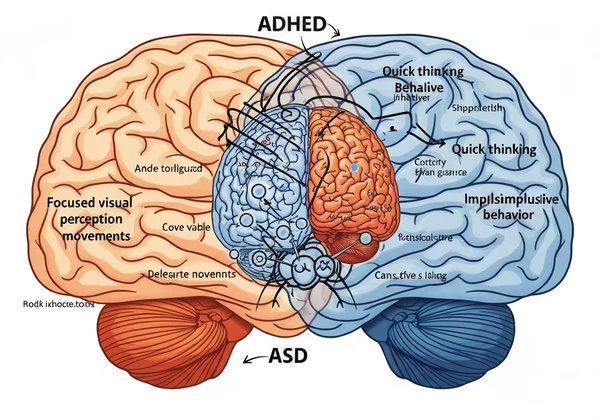
The overlap between Attention-Deficit/Hyperactivity Disorder (ADHD) and ASD is well-documented and often referred to as AuDHD. Both conditions can affect executive functions—the mental skills that include working memory, flexible thinking, and self-control. Someone with ADHD might struggle with organization and focus, while an autistic person might have difficulty with flexible thinking and transitioning between tasks.
On the Aspie Quiz, this overlap can be confusing. You might score high on questions related to difficulty with routine changes (an ASD trait) but also on questions about impulsivity or distractibility (an ADHD trait). These seemingly contradictory results are often a strong indicator that you may have traits of both conditions. Exploring this possibility can unlock a more accurate and holistic understanding of your brain's unique wiring.
Common Co-Occurring Conditions and Their Quiz Signatures
When you look at your Aspie Quiz results, certain patterns can act as signatures, hinting at the presence of co-occurring conditions. Learning to recognize these patterns is a powerful tool for self-discovery. It helps you move beyond a single score and toward a deeper understanding of the interplay between different aspects of your neurotype.
This section will explore some of these common signatures. We will look at how anxiety, ADHD, and other processing differences can manifest in your quiz results. This knowledge empowers you to interpret your scores with greater nuance and precision, turning your results into a more useful map for your journey. For a deeper analysis of your unique patterns, you can explore our reports.
Recognizing Anxiety Patterns in Your Aspie Quiz Results
Anxiety can leave a distinct footprint on your Aspie Quiz scores. If you experience anxiety, you might notice high scores in areas related to:
- Social Aversion: A strong fear of social judgment can lead to answers that indicate a dislike of social gatherings, which overlaps with autistic social preferences.
- Need for Routine: Anxiety often creates a desire for predictability and control. This can look like the autistic need for routine and sameness.
- Perceptual Sensitivity: Heightened anxiety can make you more sensitive to sensory stimuli like noise or crowds, a trait also very common in ASD.
If your results show these patterns, it's worth considering how much anxiety influences your daily experience. Distinguishing between anxiety-driven behaviors and core autistic traits is a key part of gaining self-clarity.
ADHD-ASD Overlap: What Your Scores Might Reveal
The combination of ASD and ADHD traits creates a unique neurocognitive profile. Your scores might reveal this overlap if you see a mix of high scores in seemingly opposite areas. For example:
- You might score high on "special interests" (an ASD trait) but also report struggling to stick with hobbies long-term (an ADHD trait).
- You might indicate a strong need for order and systems (ASD) but also struggle with disorganization in your daily life (ADHD).
- You might report difficulty understanding social cues (ASD) and also find yourself interrupting others or speaking impulsively (ADHD).
These combinations are classic signs of the AuDHD profile. Recognizing this doesn't complicate your identity; it enriches it. It explains why you might feel like a "walking contradiction" and offers a more complete framework for understanding your strengths and challenges. A free aspie quiz can be the first step in uncovering these patterns.
Executive Function Challenges
Executive function challenges are common in both ASD and ADHD, but they can manifest in different ways. Your answers on the Aspie Quiz might reflect these underlying processing differences. For instance, questions about planning and organization might be challenging for different reasons.
Someone with primarily ADHD traits might struggle to initiate tasks and stay focused, leading to procrastination and disorganization. In contrast, an autistic person might struggle more with cognitive flexibility, finding it difficult to adapt a plan once it's made. On the quiz, both scenarios could lead to a high score in areas related to "talent" or "compulsion," but the root cause is different.
Sensory Processing Differences
Understanding your underlying processing differences provides a more accurate picture than the score alone. Sensory processing issues, for example, are a hallmark of autism but can also be influenced by anxiety. Your quiz results might highlight sensitivity to noise, light, or touch. Reflecting on whether these sensitivities are constant or fluctuate with your stress levels can offer valuable insight. This helps you distinguish between your baseline sensory profile and the effects of co-occurring conditions.
Making Sense of Your Complex Neurodivergent Profile
Receiving complex results can feel overwhelming, but it's actually an invitation to a deeper level of self-understanding. Your unique profile of traits isn't a problem to be solved; it's a landscape to be explored. The goal is to move from confusion to clarity by building a holistic view of who you are.
This process involves integrating the insights from your quiz with self-reflection and, if you choose, further exploration. It’s about creating a personal framework that honors all parts of your neurotype. This empowers you to identify your strengths, understand your challenges, and develop strategies that work for your specific brain.
Building Your Personal Framework
A holistic framework goes beyond labels. It involves looking at your traits in the context of your life. Start by asking yourself:
- Which traits cause me the most difficulty? Are they related to social interaction, emotional regulation, or task management?
- In which areas do I excel? Do I have intense focus, a unique creative perspective, or a strong sense of justice?
- How do these traits interact? Does my anxiety make my sensory sensitivities worse? Does my hyperfocus help me overcome challenges with organization?
By mapping out these connections, you create a personal user manual for your brain. This self-knowledge is far more valuable than any single test score. This exploration can be supported by tools designed for self-discovery, and you can begin your journey on our platform.

When to Consider Professional Guidance
If your quiz results and self-reflection strongly suggest the presence of multiple conditions, it may be helpful to think of them as separate but interacting layers. Acknowledging each one allows you to seek the right kind of support and strategies for each set of challenges. For example, strategies for managing the social challenges of ASD are different from those for managing ADHD-related impulsivity. By addressing each condition, you can build a more effective toolkit for navigating the world. Your quiz results can serve as a signpost, pointing you toward areas that may warrant further investigation.
Using Your Quiz Results as a Starting Point for Deeper Exploration
The Aspie Quiz is an excellent starting point, not a final destination. Your results provide a snapshot of your traits, offering valuable clues for further exploration. Use them as a foundation to learn more about neurodiversity. Read books, listen to podcasts, and engage with online communities where neurodivergent people share their experiences.
For those who want a more in-depth analysis, AspieQuiz.org offers an optional AI-enhanced personalized report. This report analyzes your unique response patterns to provide deeper insights into your personal strengths, potential challenges, and actionable strategies. It's a powerful next step for turning your quiz results into a practical guide for self-understanding and growth.
Your Next Steps in Understanding Your Neurodivergent Profile
Making sense of your Aspie Quiz results—especially when they point to co-occurring conditions—is part of your personal journey of self-discovery. Your complex scores aren't a sign of confusion; they reflect your unique neurodivergent identity. By embracing this complexity, you open the door to a richer, more accurate understanding of yourself.
As you reflect on your results, keep these important insights in mind:
- Neurodiversity is a spectrum. Overlapping traits between conditions like ASD, ADHD, and anxiety are common and normal.
- Your results are clues, not a diagnosis. Use your scores as a starting point to explore your personal patterns of strengths and challenges.
- Holistic self-understanding is the goal. Move beyond labels to build a comprehensive view of how your brain works.
You've taken an important first step in understanding your unique neurodivergent profile. The insights you've gained are valuable tools for navigating your life with greater confidence and self-compassion. To take the next step and gain deeper insights from your results, try our free tool and explore the option of a personalized AI report.
Frequently Asked Questions
Can Aspie Quiz results show both ASD and ADHD traits?
Yes, absolutely. Many people have traits of both ASD and ADHD, a profile often called AuDHD. The Aspie Quiz can highlight this overlap by showing high scores in areas characteristic of both conditions, such as a strong need for routine (ASD) combined with challenges in focus and organization (ADHD).
Why did I get high scores on different sections that seem contradictory?
Contradictory scores are often a key indicator of a complex neurotype or co-occurring conditions. For example, you might score high on "special interests" but also on questions suggesting you switch hobbies frequently. This combination can point to the presence of both autistic and ADHD traits, which can coexist.
How accurate is the Aspie Quiz for identifying co-occurring conditions?
The Aspie Quiz is a preliminary screening tool, not a diagnostic instrument. It is designed to identify traits associated with the autism spectrum. While it can provide strong clues about potential co-occurring conditions like ADHD or anxiety through specific response patterns, it cannot formally diagnose them. It's best used as a tool to guide further self-exploration. For a clearer picture, start your self-assessment.
Should I seek professional evaluation if my results suggest multiple conditions?
If your results and personal experience cause you significant distress or impairment, seeking a professional evaluation can be a very helpful step. A qualified healthcare professional can provide a comprehensive assessment, offer a formal diagnosis if appropriate, and help you develop a tailored support plan. Your quiz results can be a valuable starting point for that conversation.
Can my anxiety affect my Aspie Quiz results?
Yes, anxiety can significantly affect your results. Symptoms of anxiety, such as social avoidance, a need for control and predictability, and heightened sensory sensitivity, overlap with many traits on the Aspie Quiz. This can sometimes inflate scores in certain domains, making it important to consider the role anxiety plays in your life when interpreting your results.